


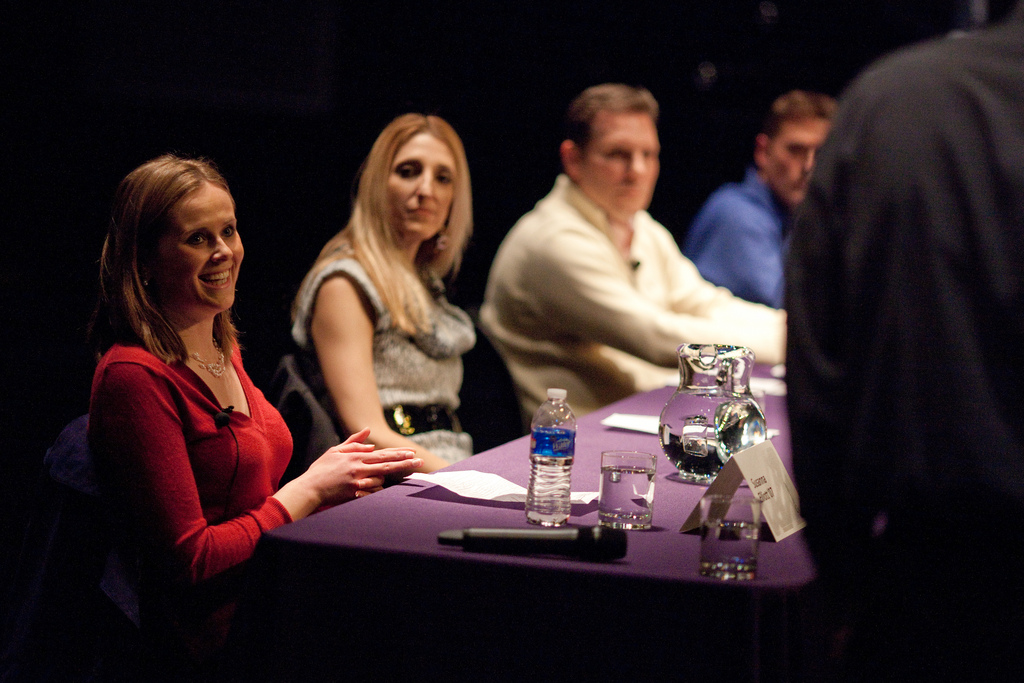
Since joining Dreamit, I’ve been on dozens of panels and moderated more than a few of them. Some have been awesome, others have been…less awesome. Want to make sure your panel rocks? Keep reading.
(I’m going to assume you have lined up great panelists. If not, don’t even bother putting on a panel format event. Ok, enough with the blindingly obvious advice and on to the good stuff.)
What separates a great panel from a mediocre one is time management. Take a typical one hour panel with three panelists. After you allow time for the panelists to introduce themselves and for the moderator to set up the questions, each panelist has roughly 15 minutes of actual talk time. So how do you make the most of that limited resource?
- Pick your questions wisely.
If you know the topic reasonably well – and if you don’t you have no business moderating the panel – you should be able to brainstorm an initial list of questions. Share it with the panelists, other experts, and perhaps even some members of the target audience to get their feedback on what would be the most interesting questions to ask. Ask them to suggest questions you haven’t thought of. - Know who to ask which question.
If you ask a panelist a question, he will most likely answer it even if only to restate what another panelist just said or to add a minor nuance. That’s a waste of time that could be better used on a new topic. So just ask one panelist and then move on to the next question. You don’t need all three panelists to answer every question. - Get the panelists thinking about the answer in advance
You know what the best part of having a panelist give a long-winded, rambling answer is? Nothing. It bores the audience and sucks time away from more interesting content. But if the panelist hasn’t thought through how he or she plans to respond, your odds of getting a crisp, concise answer go way down.
So how do you pull this off? I’m glad you asked…
4. Two weeks prior to the panel:
Email the other panelists to introduce yourself (if you don’t already know them) and send them a preliminary list of the questions. Ask them to comment on which questions they think would be most interesting and to add any questions that they think would be worth discussing. Set an explicit deadline on when you would like them to respond. Reading a lists of twenty or so questions, commenting, and adding a few of their own questions is not a big ask so 2-3 days turnaround is not unreasonable.
5. One week prior to the panel:
Once you have selected the 8-10 questions you would like to ask, send out a poll (e.g., in MailChimp) to the panelists. For each question, ask them to rate (e.g., scale of 1-5) how interested they are in answering that particular question. Include a comments field where you ask them to briefly write out their thoughts on that topic.
This data should give you an idea of who has interesting things to say about each question. Where more than one panelist is interested in answering the question but where they essentially agree on what they want to cover, simply pick one. If they disagree (in an interesting way, of course), you can pose the question to the second panelist for a counterpoint.
Try to allocate each panelists’ “air time” roughly equally, taking into account their preferences as to which questions they are most interested in discussing.
The added benefit of having them write out how they might answer the question is it that it gets them thinking about how they would phrase their responses. This should increase the odds that they give nice, crisp responses when they are on stage.
6. The day before the panel:
Circulate the questions that you have selected along with who you ask to answer each one. If they know what to expect and are confident that they will get their chance to answer a fair number of questions that are important to them, they should be able to resist the urge to chime in on the topics that you have assigned to other panelists.
7. At the panel:
Be awesome.
Good luck and have fun!
Image credit: CC by tylerhoff